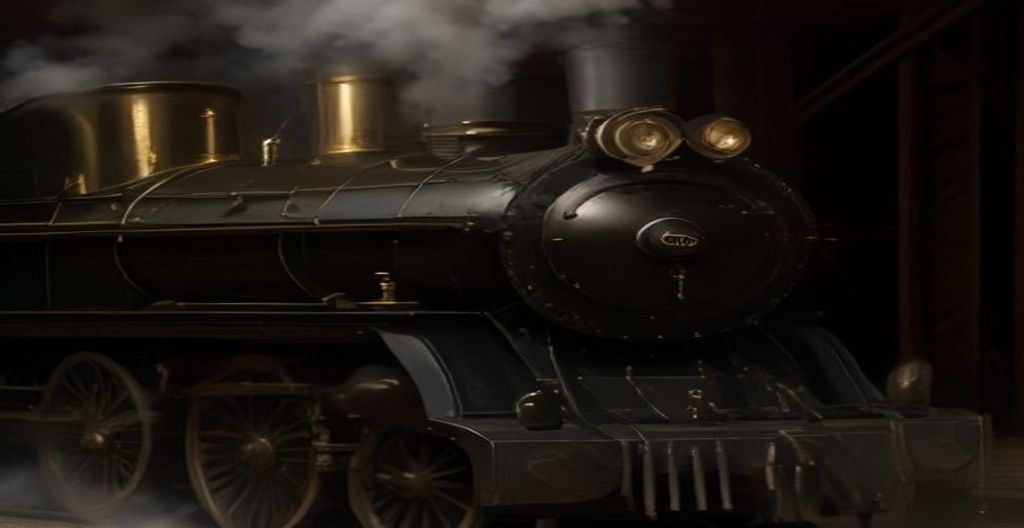
Historical Context: The Terrestrial Friction Barrier
The Pre-Industrial Transport Bottleneck
For millennia prior to the nineteenth century, terrestrial transportation was severely constrained by biological muscle power and the unforgiving laws of surface friction. Moving heavy freight over unpaved cart tracks required teams of oxen or heavy draught horses struggling against mud, deep ruts, and steep gradients. A four-horse wagon could haul barely a single ton of coal or grain at a pedestrian pace of two to three miles per hour. Consequently, bulk transport was strictly tethered to navigable rivers and coastal waterways. Towns and mining regions located merely thirty miles inland from waterways suffered from prohibitive overland shipping costs that frequently exceeded the extraction value of the commodities themselves.
The initial mitigation of rolling friction occurred in British coalfields during the seventeenth and eighteenth centuries through the installation of wooden and cast-iron waggonways. Placing iron-rimmed wheels upon flanged rails reduced the rolling resistance coefficient by nearly an order of magnitude compared to unpaved dirt roads. Yet, despite these smooth iron tracks, the motive force remained living flesh: pit ponies and draught horses whose biological stamina, feed requirements, and physical strength placed an unyielding ceiling upon industrial productivity. The burgeoning British coal, iron, and textile industries demanded an untiring prime mover powered by thermodynamic energy.
From Newcomen Atmospheric Engines to Watt’s Condenser
The theoretical path toward the locomotive commenced deep underground in flooded coal mines. In 1712, Thomas Newcomen erected the first commercially successful atmospheric steam engine to pump water from flooded mine shafts in Staffordshire. Newcomen’s engine operated on an atmospheric cycle: low-pressure steam filled a vertical cylinder beneath a heavy piston, and a spray of cold water was subsequently injected directly into the cylinder, causing the steam to condense rapidly into water. The resulting partial vacuum allowed the weight of the ambient atmosphere above to force the piston downward. Because the massive cast-iron cylinder had to be alternately heated by incoming steam and chilled by cold water injection with every stroke, Newcomen engines consumed prodigious quantities of coal with a thermal efficiency of barely one percent.
In 1769, Scottish instrument maker James Watt introduced his epochal innovation: the separate condenser (British Patent No. 913). Watt kept the main cylinder continuously hot at steam temperature by enclosing it within a steam jacket, while condensing the exhaust steam in a distinct, cold auxiliary vessel. This single thermodynamic refinement quadrupled thermal efficiency. Watt subsequently added a double-acting mechanism—directing steam alternately to both sides of the piston—and Sun and Planet rotary gearing, converting reciprocating vertical motion into smooth continuous rotary torque capable of turning factory driveshafts. However, Watt adamantly refused to experiment with high-pressure steam, fearing catastrophic boiler explosions. The creation of a mobile locomotive demanded high-pressure steam, requiring a new generation of audacious mechanical pioneers.
The High-Pressure Pioneers: Richard Trevithick and the Welsh Tramway
Richard Trevithick’s ‘Puffing Devil’ and High-Pressure Steam
The true father of the steam locomotive was the towering Cornish mining engineer Richard Trevithick. Trevithick recognized what Watt had resisted: by employing steam at pressures ranging from 40 to 60 pounds per square inch (psi)—far above atmospheric pressure—the heavy, cold water condensing apparatus could be entirely discarded. High-pressure steam could push the piston directly and then be exhausted into the ambient air with an energetic blast. This drastically reduced the weight-to-power ratio, making steam engines small and light enough to be mounted on wheeled carriages.
In 1801, on Christmas Eve, Trevithick unleashed his ‘Puffing Devil’ road locomotive up a hill in Camborne, Cornwall. Two years later, he built a stationary high-pressure engine at the Penydarren Ironworks in Merthyr Tydfil, South Wales. On February 21, 1804, Trevithick staged the world’s first locomotive journey on rails. His primitive engine hauled five wagons laden with ten tons of bar iron and seventy passengers over nine miles of cast-iron tramway at a brisk speed of five miles per hour.
Although Trevithick proved the mechanical concept, the enterprise was doomed by metallurgy. The brittle, cast-iron plate rails of the Welsh tramroad were incapable of withstanding the concentrated dynamic pounding of a five-ton locomotive and repeatedly shattered beneath the engine’s iron wheels. Discouraged by rail breakages and lack of commercial backing, Trevithick turned to other engineering ventures, leaving the perfection of the locomotive to the engineers of Newcastle and Northumberland.
George Stephenson and the Genesis of ‘The Rocket’
The Newcastle Colliery School and George Stephenson
In the northeastern coal basins of Newcastle upon Tyne, George Stephenson, an illiterate engine-wright who taught himself to read at age eighteen, spent years studying colliery steam pumps and stationary haulage engines at Killingworth Colliery. In 1814, Stephenson constructed his first locomotive, the *Blücher*, introducing flanged wheels running upon edge rails and mechanical coupling rods connecting the driving axles to coordinate wheel rotation.
Stephenson understood that a successful railway was not merely a mechanical locomotive, but an integrated civil engineering system encompassing rail metallurgy, track geometry, bridges, cuttings, and gentle gradients. When the Stockton and Darlington Railway opened in September 1825, Stephenson’s locomotive *Locomotion No. 1* hauled the world’s first public train of passenger carriages and coal wagons, inaugurating public rail transit.
The Rainhill Trials of 1829: The Crucible of Locomotive Engineering
The defining watershed in transportation history was the Rainhill Trials, staged in October 1829 by the directors of the Liverpool and Manchester Railway. The railway was nearing completion, but the directors remained bitterly divided over whether to haul trains using stationary steam winding engines pulling continuous hemp ropes or to adopt untried mobile steam locomotives. To resolve the dispute, they announced an open public competition with a £500 cash prize (equivalent to over £60,000 today) for a locomotive capable of hauling three times its own weight at a sustained speed of ten miles per hour without emitting nuisance smoke.
Five machines entered the trials at Rainhill, near Liverpool:
1. *Rocket*, engineered by George Stephenson and his brilliant son Robert Stephenson.
2. *Novelty*, built by John Ericsson and John Braithwaite—exceptionally swift and lightweight, but plagued by repeated boiler pipe ruptures.
3. *Sans Pareil*, designed by Timothy Hackworth—powerful, but overweight and mechanically unbalanced.
4. *Perseverance*, which suffered transit damage and failed to achieve the speed threshold.
5. *Cycloped*, a comical contraption driven by a live horse walking on an internal treadmill, promptly disqualified.
Stephenson’s *Rocket* obliterated the competition. It completed the rigorous 70-mile endurance trials without a single mechanical failure, averaging 14 miles per hour fully loaded and achieving an astonishing top sprint of 29 miles per hour unladen. The victory stunned the Victorian public and firmly established the steam locomotive as the supreme instrument of modern overland mobility.
Thermodynamic Architecture of ‘The Rocket’
The Multi-Tubular Fire-Tube Boiler
The genius of Robert Stephenson’s design lay in resolving the primary thermodynamic constraint of early locomotives: insufficient steam generation. Early boilers were simple cylindrical iron water tanks with a single flanged flue pipe passing through the middle. Because the heat transfer surface area between the burning coal gases and the surrounding water was exceedingly small, steam production was sluggish and unable to sustain high speeds.
Henry Booth, treasurer of the Liverpool and Manchester Railway, suggested an audacious concept: subdividing the single flue into an array of small pipes. Robert Stephenson engineered this into the *Rocket*’s revolutionary multi-tubular boiler. Inside a cylindrical boiler barrel, Stephenson installed twenty-five individual copper fire-tubes, each three inches in diameter, running horizontally through the water space from the firebox to the smokebox. This design multiplied the effective heating surface area threefold, allowing the intense thermal energy of the furnace gases to transfer rapidly into the water, producing high-pressure steam at unprecedented volume.
The Steam Blast Pipe: Self-Regulating Draft Dynamics
To keep the fire burning intensely without heavy mechanical fans, the *Rocket* utilized the blast pipe (first observed by Trevithick and refined by Timothy Hackworth and Stephenson). Exhaust steam from the two cylinders, having expanded and pushed the pistons, was not vented aimlessly into the air; instead, it was ducted into the base of the tall smokebox chimney through a constricted nozzle.
As the high-velocity jets of spent steam shot upward through the smokebox chimney, they created a powerful venturi vacuum in the smokebox. This partial vacuum drew combustion gases vigorously through the twenty-five fire-tubes, which in turn sucked fresh air upward through the fiery coal bed in the firebox grate. This created a magnificent self-regulating thermodynamic cycle: the harder the engine worked and the more steam it consumed, the more exhaust steam blasted up the chimney, automatically pulling more air into the furnace to generate steam faster.
Direct Drive Connecting Rods and Angled Cylinders
Prior locomotives utilized clumsy overhead walking beams, vertical pistons, and gear teeth that generated violent swaying oscillations, constantly derailing engines or chewing up iron gears. Robert Stephenson placed the *Rocket*’s cylinders at a low 35-degree incline (later moved to fully horizontal in the 1830 *Planet* type) directly bolted to the exterior of the firebox.
The piston rods connected directly to the large four-foot-eight-inch front driving wheels via precision-forged steel connecting rods and crankpins. This direct-drive architecture converted the linear reciprocating thrust of steam into rotational torque with minimal friction loss, delivering exceptional mechanical stability at high velocity.
Comparative Milestones in Steam Railway Engineering
Evolution of Locomotive Specifications: From Blücher to the Mallard
| Locomotive Name | Year | Chief Engineer / Builder | Boiler Pressure (psi) | Top Speed (mph) | Key Engineering Breakthrough |
|---|---|---|---|---|---|
| Penydarren Locomotive | 1804 | Richard Trevithick | 40–50 psi | 5 mph | First high-pressure steam engine on rails; proved non-condensing viability |
| Locomotion No. 1 | 1825 | George Stephenson | 25–30 psi | 12–15 mph | Coupling rods for driving axles; first public commercial railway line |
| Stephenson’s Rocket | 1829 | Robert Stephenson & Henry Booth | 50 psi | 29 mph | Multi-tubular boiler + blast pipe; won Rainhill Trials and set locomotive paradigm |
| Planet Type | 1830 | Robert Stephenson & Co. | 50 psi | 35 mph | Inside horizontal cylinders beneath smoke-box; established modern locomotive layout |
| Stephenson Iron Duke Class | 1847 | Isambard Kingdom Brunel & Gooch | 100 psi | 78 mph | Broad gauge (7 ft) high-speed express passenger running |
| LNER Class A4 4468 ‘Mallard’ | 1938 | Sir Nigel Gresley | 250 psi | 126 mph | Streamlined aerofoil casing, three-cylinder multi-expansion, world speed record |
The Gauge War: Stephenson’s 4ft 8.5in vs. Brunel’s 7ft Broad Gauge
As railways expanded rapidly across the British landscape in the 1840s during ‘Railway Mania’, an intense civil engineering war erupted over track gauge. George Stephenson had adopted a gauge of 4 feet 8.5 inches (1,435 mm)—a measurement derived directly from the wheel ruts of ancient Roman chariot roads and Newcastle coal cart tracks. This gauge became the standard across northern England and the expanding rail networks of North America.
However, the brilliant engineering titan Isambard Kingdom Brunel, chief engineer of the Great Western Railway, vehemently rejected Stephenson’s dimension as an archaic, timid relic. Brunel engineered a magnificent 7-foot-0.25-inch (2,140 mm) ‘Broad Gauge’. Brunel argued that wider tracks permitted larger, more stable locomotives with lower centers of gravity, enormous driving wheels, and spacious luxury passenger carriages traveling smoothly at speeds exceeding 70 miles per hour.
While Brunel’s broad gauge was technically and aerodynamically superior, economic realities triumphed. Stephenson’s standard gauge had established an insurmountable network effect. At junction points between the two systems, freight had to be manually unloaded and reloaded onto different wagons—an expensive logistical nightmare known as the ‘break of gauge’. In 1846, the British Parliament enacted the Regulating the Gauge of Railways Act, mandating standard 4ft 8.5in gauge across Great Britain, culminating in the complete conversion of Brunel’s broad gauge lines by 1892.
Economic, Cultural, and Geopolitical Transformation
The Creation of Standard Time and the Death of Local Time
Few people today realize that standardized time itself is an invention of the steam railway. Before the 1840s, every town and village across the globe maintained its own local solar time based on the midday transit of the sun. When it was noon in London, it was 12:10 PM in Reading and 12:20 PM in Bristol. In an era of horse carriages, a twenty-minute discrepancy over a hundred miles was of no consequence.
However, on high-speed rail lines operating dozens of trains in opposite directions over shared single- and double-track corridors, differing local times resulted in catastrophic head-on train collisions and incoherent passenger timetables. In November 1840, the Great Western Railway officially adopted ‘Railway Time’ (Greenwich Mean Time) across its entire system. By 1847, the Railway Clearing House mandated GMT for all British railways. In 1883, the American and Canadian railways divided the North American continent into four standardized time zones (Eastern, Central, Mountain, Pacific), sweeping away thousands of local sun dials and disciplining human civilization to the synchronized mechanical tick of the clock.
Continental Integration and Geopolitical Power
In the United States, the steam locomotive conquered the vast frontier. The completion of the First Transcontinental Railroad on May 10, 1869—with the driving of the Golden Spike at Promontory Summit, Utah—linked the Union Pacific and Central Pacific lines. A journey from New York to San Francisco that previously required four to six grueling months by ox-drawn wagon or hazardous sea voyage around Cape Horn was compressed into an effortless, luxurious six-day rail journey.
The steam locomotive transformed warfare and nation-building. During the American Civil War (1861–1865) and the Franco-Prussian War (1870–1871), the ability to mobilize tens of thousands of fully equipped troops, artillery pieces, and rations to the front lines within hours became the decisive factor in military victory. The steam locomotive shrank continents, unified national markets, forged industrial empires, and laid the literal steel tracks of modern civilization.
Frequently Asked Questions (FAQ)
Why did Stephenson choose 4 feet 8 and a half inches as standard gauge?
George Stephenson adopted the 4-foot-8-inch measurement because it was the exact width of the wooden waggonway tracks used at the Killingworth and Newcastle coal collieries where he worked. He subsequently added an extra half-inch of track clearance to reduce wheel flange friction around curves. The Newcastle colliery gauge itself traced its lineage back to the wheel ruts worn into ancient stone-paved Roman roads across Britain.
How did early steam locomotives stop without modern air brakes?
Early locomotives relied on crude manual mechanical handbrakes applied by the engineer, fireman, and specialized brake-van guards who manually cranked iron brake shoes against rotating wheel treads upon hearing the engineer’s whistle code. Stopping distances were massive and runaway trains were common until George Westinghouse invented the fail-safe pressurized railway air brake in 1869.
What was the purpose of the cowcatcher on American locomotives?
Invented by English-born engineer Charles Babbage in 1838, the triangular wedge of iron bars mounted on the front of American locomotives (the pilot or ‘cowcatcher’) was designed to deflect wandering livestock, tree branches, and snowdrifts off the tracks. Unlike British railways, which were legally required to be completely enclosed by stone walls and fences, American railways spanned thousands of unfenced miles through open prairies and wilderness.
What ended the reign of the steam locomotive?
Steam locomotives were superseded between the 1930s and 1960s by diesel-electric and electric locomotives. While majestic, steam locomotives were thermodynamically inefficient (rarely exceeding 6 to 8% overall thermal efficiency), required constant boiler water treatment, produced heavy soot pollution, and demanded extensive manual labor for ash cleaning, coal firing, and boiler maintenance.