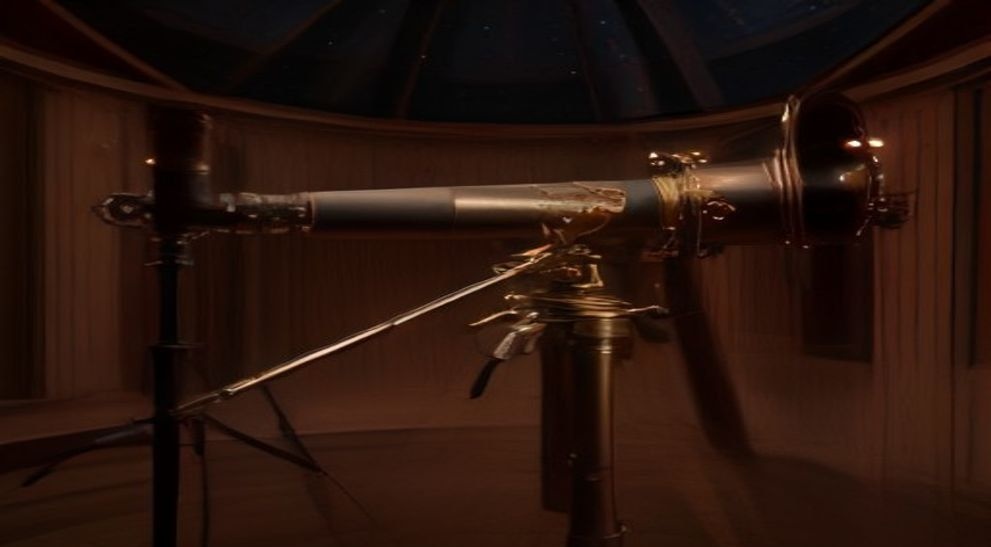
Historical Context: The Geocentric Stagnation and Naked-Eye Astronomy
The Ptolemaic Spheres and Naked-Eye Limits
For two millennia, human cosmology was dominated by the geocentric paradigm codified by the Greco-Egyptian astronomer Claudius Ptolemy in the second century CE. Ptolemaic cosmology asserted that the Earth rested motionless at the divine, geometric center of the universe, surrounded by nested concentric crystalline celestial spheres carrying the Moon, Mercury, Venus, the Sun, Mars, Jupiter, Saturn, and the fixed background of the stars.
Cosmological observation was strictly tethered to the naked eye. Naked-eye astronomers like Tycho Brahe in Denmark attained astonishing precision through colossal brass sextants, mural quadrants, and armillary spheres, recording planetary coordinates to within one arcminute.
Yet, naked-eye astronomy could never penetrate the physical nature of celestial bodies. Planets appeared merely as wandering points of light indistinguishable from stars, planetary moons were entirely unknown, the Moon’s surface was assumed to be a pristine, perfectly smooth celestial pearl, and the Milky Way remained an ethereal, mystical cloud. When Nicolaus Copernicus published his heliocentric mathematical hypothesis in 1543 (*De revolutionibus orbium coelestium*), positing that the Earth and planets revolved around the Sun, it was dismissed as a geometric fiction that contradicted theological scripture and naked-eye sensory perception.
The Dutch ‘Kijker’ of 1608: Lippershey and Metius
In October 1608, a spectacle-maker in Middelburg, Netherlands, named Hans Lippershey filed a patent application with the States General of Holland for an instrument ‘for seeing things far away as if they were nearby’. Lippershey’s device comprised a convex objective lens and a concave ocular lens housed in a wooden tube, producing an upright image with roughly three-fold magnification. Rival spectacle-makers Zacharias Janssen and Jacob Metius immediately claimed prior invention, leading Dutch authorities to declare the device too easily duplicated to warrant a monopoly patent.
The instrument—popularly called the ‘Dutch spyglass’ or *kijker*—spread rapidly across European street markets as a military reconnaissance toy for identifying distant warships on the ocean horizon or spotting approaching cavalry battalions on battlefields.
Galileo Galilei and the Sidereal Revolution
Galileo’s Optical Engineering at Padua
In May 1609, while in Venice, forty-five-year-old mathematics professor Galileo Galilei heard reports of the Dutch spyglass. Galileo immediately understood the optical physics. Returning to his workshop at the University of Padua, Galileo began grinding his own lenses from high-purity Venetian rock crystal and lead glass, achieving twenty- and thirty-fold magnification with unprecedented optical clarity.
Unlike contemporary opticians who treated the tube as a terrestrial spyglass, Galileo turned his optical instrument toward the heavens in the autumn and winter of 1609. The celestial revelations shattered Aristotelian cosmology forever.
The Revelations of ‘Sidereus Nuncius’ (1610)
In March 1610, Galileo published his seismic observational findings in *Sidereus Nuncius* (The Starry Messenger):
1. **The Moon’s Rugged Topography**: Galileo proved that the Moon was not a smooth, divine Aristotelian sphere, but an imperfect, rugged terrestrial world scarred by deep craters, jagged mountain ranges, and barren plains. Galileo even calculated the height of lunar peaks by measuring the geometry of their cast shadows.
2. **The Moons of Jupiter**: In January 1610, Galileo observed four tiny, previously invisible starlike bodies orbiting Jupiter. Christening them the ‘Medicean Stars’ (now the Galilean moons: Io, Europa, Ganymede, Callisto), Galileo provided undeniable visual proof that celestial bodies could orbit a planet other than the Earth, demolishing the geocentric doctrine that all celestial spheres revolved exclusively around terrestrial humanity.
3. **The Phases of Venus**: Subsequent observations revealed that Venus displayed a complete cycle of crescent, gibbous, and full phases matching a changing angular diameter, a physical geometry that was mathematically impossible under Ptolemy’s geocentric model and explicable only if Venus orbited the Sun.
4. **The Nature of the Milky Way**: Turning his telescope upon the milky cloud spanning the heavens, Galileo resolved it into an incomprehensible swarm of countless individual stars, revealing that the universe was unimaginably larger than previously conceived.
The Refracting Barrier: Johannes Kepler and Chromatic Aberration
The Keplerian Astronomical Telescope of 1611
Galileo’s telescope design utilized a plano-convex objective lens and a plano-concave eyepiece. While it produced an upright image, it suffered from an intensely narrow, suffocating field of view—like peering through a soda straw.
In 1611, German astronomer Johannes Kepler published *Dioptrice*, proposing a superior optical architecture: replacing the concave eyepiece with a **convex lens**. The Keplerian refracting telescope inverted the image upside down (irrelevant for astronomical targets), but delivered a vastly wider field of view, superior eye relief, and allowed the insertion of crosshair micrometers into the focal plane for precise angular measurements.
However, as astronomers attempted to construct larger Keplerian refractors to achieve higher magnification, they ran headlong into the optical barrier of **chromatic aberration**. Because a single glass lens acts like a prism, splitting white starlight into component wavelengths, bright planets and stars were enveloped in blinding purple and yellow halos of dispersed light.
The Monstrous Aerial Telescopes of the 17th Century
Seventeenth-century opticians discovered that the only method to mitigate chromatic aberration with simple lenses was to grind lenses with exceptionally long focal lengths and tiny focal ratios (\(f/30\) to \(f/100\)).
This led to the era of monstrous **aerial telescopes** constructed by Christiaan Huygens and Johannes Hevelius. Telescopes stretched to lengths of 50, 100, and even 150 feet. To support these absurdly long wooden tubes, astronomers erected colossal wooden crane towers, rigging masts, and pulley systems.
Eventually, Christiaan Huygens abandoned the solid tube entirely: he mounted the objective lens on a ball-and-socket joint atop a tall pole in his garden, aligning it with an eyepiece held by hand on the ground via a taut string. A gentle gust of wind shook the aerial lens violently, making observation an agonizing feat of acrobatic patience. The refracting telescope had reached an engineering dead end.
Isaac Newton and the Reflecting Telescope Revolution
Newton’s Prism Experiments and the Rejection of Refraction
In 1666, twenty-three-year-old Isaac Newton performed his celebrated prism experiments in his darkened room at Trinity College, Cambridge. Passing a narrow beam of sunlight through a glass prism, Newton proved that white light is not a pure, pristine entity, but a heterogeneous mixture of rays with differing degrees of refrangibility (color).
Newton reached a fatalistic conclusion: because all transparent glass suffers from chromatic dispersion, refracting telescopes could never produce an image free from chromatic aberration. If light could not be refracted cleanly through lenses, it must be reflected from mirrors.
Under the fundamental law of reflection, the angle of reflection equals the angle of incidence (\( heta_r = heta_i\)) **for all wavelengths of light equally**. A mirror reflects red, green, blue, and ultraviolet light at the exact same geometric angle, eliminating chromatic aberration entirely.
The 1668 Newtonian Reflector
In 1668, Newton constructed the world’s first functioning reflecting telescope. Newton formulated an alloy of copper, tin, and a dash of arsenic—known as **speculum metal**—which polished into a brilliant, silver-like reflective surface. He ground and polished a spherical concave primary mirror two inches in diameter.
To extract the reflected image without obstructing the incoming starlight with the observer’s head, Newton introduced a flat diagonal secondary mirror angled at 45 degrees near the open top of the tube, deflecting the converging light cone sideways through a hole in the tube wall into an eyepiece.
Newton’s compact six-inch reflector magnified forty times—matching the performance of a six-foot refracting tube. In 1671, Newton presented his instrument to the Royal Society of London, winning international acclaim and establishing the architectural layout that remains the standard for amateur and professional optical astronomy worldwide.
Comparative Astronomical Telescope Architectures
Evolution of Optical Telescope Systems
| Telescope Design | Pioneering Inventor / Date | Optical Components | Light Gathering Advantage | Optical Aberrations | Historical Significance |
|---|---|---|---|---|---|
| Galilean Refractor | Galileo Galilei (1609) | Convex objective + Concave ocular | Direct line-of-sight; upright image | Extreme chromatic aberration; tiny field | First telescopic astronomy; discovered Jovian moons |
| Keplerian Refractor | Johannes Kepler (1611) | Convex objective + Convex ocular | Wide field; allows focal micrometers | Severe chromatic halos (led to aerial scopes) | Standard architecture for planetary cartography |
| Newtonian Reflector | Isaac Newton (1668) | Concave mirror + 45° flat secondary | Zero chromatic aberration; compact tube | Coma aberration at wide field edges | First reflective telescope; bypassed lens dispersion |
| Achromatic Refractor | Chester Moor Hall / Dollond (1758) | Crown + flint glass doublets | Sharp high-contrast planetary viewing | Residual secondary spectrum halos | Revived refracting telescopes for major observatories |
| Cassegrain Reflector | Laurent Cassegrain (1672) | Parabolic primary + Convex hyperbolic secondary | Long focal length folded into short tube | Compact rear viewing port | Standard optical layout for modern research telescopes |
| Ritchey-Chrétien (RCT) | George Ritchey & H. Chrétien (1910) | Hyperbolic primary + Hyperbolic secondary | Wide flat field free of coma & spherical | Complex aspherical mirror fabrication | Standard for Hubble, Keck, and VLT astronomical giants |
The Giant Speculum Mirrors of William Herschel and Lord Rosse
In the late eighteenth and nineteenth centuries, reflecting telescopes surged in scale. In England, German-born composer and astronomer William Herschel cast massive speculum metal mirrors, culminating in his 40-foot reflector with a 48-inch mirror in 1789. Herschel discovered Uranus in 1781, resolved distant star clusters, and coined the term ‘asteroid’.
In 1845, William Parsons, the 3rd Earl of Rosse, constructed the ‘Leviathan of Parsonstown’ at Birr Castle, Ireland. Featuring a colossal six-foot (72-inch) speculum mirror weighing four tons mounted between monumental masonry walls, Lord Rosse resolved the spiral arm structure of the Whirlpool Galaxy (M51), inaugurating galactic morphology.
The Space Age and Modern Cosmic Observatories
From Mount Wilson to Mount Palomar: Edwin Hubble
The twentieth century witnessed the replacement of speculum metal with low-expansion Pyrex glass and Zerodur ceramic coated with vaporized aluminum. In 1917, the 100-inch Hooker Telescope at Mount Wilson, California, became operational.
Using the Hooker Telescope, astronomer Edwin Hubble made two discoveries that revolutionized human existence:
1. In 1923, Hubble resolved Cepheid variable stars in the Andromeda ‘Nebula’ (M31), proving that it was an independent island universe millions of light-years distant, expanding the known universe a billion-fold.
2. In 1929, Hubble correlated galaxy distances with their redshift velocities, discovering the expansion of the universe and providing empirical foundation for the Big Bang theory.
Hubble, Keck Segmented Mirrors, and the James Webb Space Telescope
To escape the blurring, turbulent distortions of the Earth’s atmosphere, humanity launched the **Hubble Space Telescope (HST)** in 1990 into low Earth orbit. Equipped with a 2.4-meter Ritchey-Chrétien reflector, Hubble has delivered crystalline deep-field images peering back over 13 billion years into cosmic time.
On the ground, Jerry Nelson at the W.M. Keck Observatory in Hawaii bypassed the structural weight limit of monolithic mirrors by inventing the **segmented mirror**: tiling 36 hexagonal glass segments actively aligned by computer actuators to act as a single 10-meter optical surface.
In December 2021, NASA, ESA, and CSA launched the **James Webb Space Telescope (JWST)** to the Sun-Earth L2 Lagrange point 1.5 million kilometers into deep space. Featuring an unfolding 6.5-meter beryllium primary mirror plated in pure gold and cooled by a tennis-court-sized sunshield down to -233°C (40 Kelvin), JWST captures the earliest infrared photons emitted by the first stars and galaxies formed after the Big Bang, representing the ultimate triumph of Galileo’s modest Dutch spyglass.
Frequently Asked Questions (FAQ)
What was Galileo’s greatest telescopic discovery?
While Galileo made numerous seismic discoveries (including craters on the Moon and sunspots), his most consequential discovery was the four large moons of Jupiter (Io, Europa, Ganymede, Callisto) in January 1610. By showing that other planets possessed their own orbiting satellites, Galileo provided undeniable visual proof that not all celestial bodies orbited the Earth, fatally undermining geocentric Ptolemaic cosmology.
Why did Isaac Newton use a mirror instead of lenses in his telescope?
Newton’s optical experiments with prisms proved that white light is composed of multiple colors, each refracting at a different angle through glass (dispersion). This chromatic aberration produced blurry, colored halos around stars in refracting telescopes. Mirrors reflect all colors of light at the exact same geometric angle without refraction, completely eliminating chromatic aberration.
What is a Cassegrain telescope design?
Designed in 1672 by French Catholic priest Laurent Cassegrain, the Cassegrain reflector uses a concave parabolic primary mirror with a central hole and a convex secondary mirror. Incoming light reflects off the primary forward to the secondary, which bounces the light back through the central hole in the primary mirror to an eyepiece or camera at the rear, creating a long focal length inside a short, compact tube.
Why do modern ground-based giant telescopes use segmented mirrors?
Monolithic glass mirrors larger than 8.4 meters (27 feet) in diameter become prohibitively heavy; under their own massive weight, they sag and warp when tilted, destroying optical focus. By assembling dozens of smaller, lightweight hexagonal mirror segments controlled by computerized micro-actuators (active optics), telescopes like Keck (10m) and the Thirty Meter Telescope can create colossal light-gathering surfaces without structural collapse.