Historical Context: The Ferrous Metallurgy Bottleneck
The Age of Brittle Iron and Wrought Slag
Before the mid-nineteenth century, human structural civilization was severely constrained by the metallurgical limitations of iron. Iron existed predominantly in two polarized, defective states:
1. **Cast Iron (Pig Iron)**: Produced by smelting iron ore with coke in blast furnaces. Cast iron absorbed high concentrations of carbon (3.5% to 4.5%). While extremely hard and easily poured into molds, high carbon content rendered cast iron catastrophically brittle. It possessed exceptional compressive strength, but virtually zero tensile strength; subjected to sudden shock, flexing, or tensile loads, cast iron shattered like glass without warning, leading to horrific railway bridge collapses throughout the early Victorian era.
2. **Wrought Iron**: Produced by laboriously reheating cast iron in reverberatory puddling furnaces, where skilled craftsmen (‘puddlers’) manually stirred boiling puddles of molten iron with long iron bars to burn out carbon through air contact. Wrought iron contained almost no carbon (under 0.1%), making it ductile, tough, and fibrous. However, puddling was an agonizing, low-yield manual ordeal: a puddler and his helper could produce barely a few hundred pounds of wrought iron in a grueling twelve-hour shift, and the metal was perpetually contaminated with microscopic veins of silicate slag that caused structural laminations under repeated stress.
The Elite Rarity of Crucible Steel
True **steel**—an alloy of iron containing a precise carbon content between 0.2% and 1.5%—represented the metallurgical ideal: possessing both the tensile elasticity of wrought iron and the hardness of cast iron.
Yet, before the 1850s, steel was a precious, exorbitant luxury commodity. Produced through Benjamin Huntsman’s 1740 **crucible process**—melting small batches of blister steel in sealed clay pots buried in white-hot coke fires—steel cost upwards of £50 to £60 per ton.
Consequently, steel was strictly reserved for tiny, high-value artisan items: straight razors, watch springs, surgical scalpels, precision sword blades, and specialized cutlery. Building a locomotive boiler, a railway bridge, or a naval battleship out of steel was as economically unthinkable as constructing them from sterling silver. The global industrial revolution was screaming for cheap, mass-produced structural steel.
Henry Bessemer and the Pneumatic Converter
The Crimean War Cannon Problem and Henry Bessemer
The breakthrough emerged from the bloody battlefields of the Crimean War (1853–1856). English inventor Henry Bessemer designed an elongated, heavy artillery projectile with spiral grooves that spun like a rifle bullet when fired from a smoothbore cannon.
However, when Bessemer demonstrated his spinning shells to the French military at Vincennes, Commander Minié delivered a crushing verdict: the shells were brilliant, but existing cast-iron military cannons were far too weak to withstand the explosive chamber pressures required to fire them. Bessemer resolved to synthesize a superior, ultra-strong ferrous metal.
In 1855, working in his London laboratory at St. Pancras, Bessemer began melting pig iron in a small reverberatory furnace. Bessemer observed that pieces of pig iron resting near the furnace air draft had their carbon burned away purely by the oxygen in the air, leaving behind malleable shells of low-carbon iron.
Bessemer experienced a flash of chemical inspiration: what if, instead of burning coal to heat the iron, one blew cold atmospheric air *directly through* the molten iron itself?
The Paradox of Cold Air Creating Infernal Heat
Contemporary metallurgists mocked Bessemer’s proposal as lunatic madness: blowing cold air into molten metal would surely freeze the iron into a solid lump.
Bessemer understood high-temperature thermochemistry. Pig iron contains substantial chemical impurities: approximately 4% carbon and 1.5% to 2% silicon.
When atmospheric oxygen is forced into liquid pig iron at high pressure, the oxygen reacts violently in an intense **exothermic oxidation reaction** with the dissolved carbon and silicon:
\( ext{Si} + ext{O}_2 o ext{SiO}_2 + \Delta H\)
\(2 ext{C} + ext{O}_2 o 2 ext{CO} + \Delta H\).
The heat liberated by oxidizing the carbon and silicon is so colossal that it does not cool the metal; rather, it raises the bath temperature from 1,300°C to over 1,650°C—hotter than the melting point of pure iron. The liquid metal boils violently under its own chemical fuel, requiring zero external coal or gas!
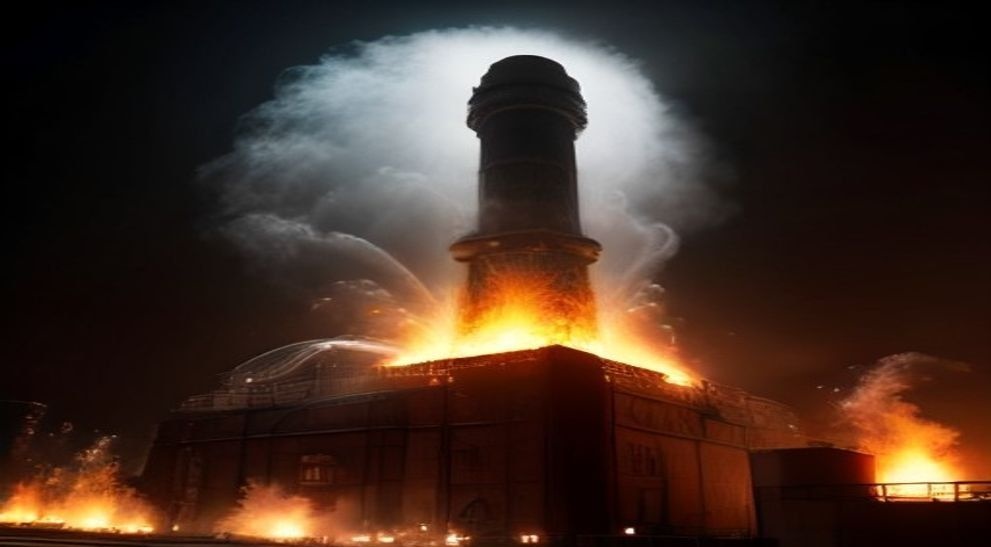
Bessemer engineered the iconic **pear-shaped Bessemer Converter**: a massive steel vessel lined with refractory silica brick, mounted on hollow horizontal trunnions through which compressed air blasted upward through perforated clay tuyeres in the bottom. In an astonishing twenty minutes, twenty tons of brittle, impure pig iron was transformed into liquid steel with a ferocious, volcano-like eruption of blinding white flame, orange sparks, and roaring gas that lit up night skies for miles.
The Chemical Crisis: Robert Mushet and the Phosphorus Curse
The Brittleness Disaster and Robert Forester Mushet
When Bessemer licensed his revolutionary process to British ironmasters in 1856, disaster struck. The steel produced in regional foundries was utterly useless: when struck with a hammer, it crumbled into powder like dry clay. Bessemer faced financial ruin and accusations of scientific fraud.
The mystery was solved by Scottish metallurgist Robert Forester Mushet. Bessemer’s original successful experiments had accidentally utilized Swedish pig iron, which was naturally free of phosphorus and low in sulfur. English pig iron, smelted from local ores, was contaminated with phosphorus and sulfur. Furthermore, Bessemer’s fierce air blast burned out *all* the carbon and left the liquid metal saturated with dissolved oxygen (iron oxide, \( ext{FeO}\)), making the steel intensely ‘hot-short’ (brittle at high temperatures).
Mushet discovered the essential chemical antidote: **spiegeleisen**—an alloy of iron, carbon, and manganese.
When spiegeleisen is added to the converter after the air blow:
1. The **Manganese (\( ext{Mn}\))** acts as a ferocious deoxidizer and desulfurizer: it robs oxygen from the iron oxide to form manganese oxide slag (\( ext{MnO}\)), and binds sulfur into harmless manganese sulfide globules.
2. The carbon in the spiegeleisen precisely recarburizes the pure liquid iron back to the exact desired structural carbon percentage (0.2% to 0.6%).
With Mushet’s chemical refinement, the Bessemer process was saved, producing tough, immaculate, resilient steel in colossal tonnage.
The Gilchrist-Thomas Basic Process
Yet, a major chemical barrier remained: the Bessemer converter could not remove phosphorus. Phosphorus dissolved in iron produces severe ‘cold-shortness’, rendering steel brittle at freezing temperatures. Because most European and British iron ore was high-phosphorus phosphoric ore, ironmasters could not use the Bessemer process.
In 1877, a young London police court clerk and self-taught chemist named Sidney Gilchrist Thomas, assisted by his cousin chemist Percy Gilchrist, conquered the phosphorus curse.
Thomas realized that phosphorus pentoxide (\( ext{P}_2 ext{O}_5\)) is an acid anhydride. Bessemer’s converters were lined with ‘acid’ silica bricks (\( ext{SiO}_2\)), which chemically prevented the slag from retaining phosphorus.
Thomas replaced the silica lining with a **’basic’ lining** of calcined dolomite (magnesium carbonate and calcium oxide) and added limestone to the charge. During the air blow, the basic lime chemically scavenged the oxidized phosphorus out of the liquid iron, trapping it safely in the floating slag. The ‘Basic Bessemer’ (or Thomas-Gilchrist process) unlocked immense phosphoric iron ore basins in Lorraine, Germany, and Great Britain, powering European heavy industrialization.
The Open-Hearth Process: Siemens, Martin, and Metallurgical Control
Carl Wilhelm Siemens and Regenerative Preheating
While the Bessemer converter was fast (producing 20 tons in 20 minutes), it was violent, difficult to control, and prone to over-oxidation.
In the 1860s, German-born British engineer Carl Wilhelm Siemens and French metallurgist Pierre-Émile Martin developed the **Open-Hearth Process** (Siemens-Martin process).
Siemens solved the problem of achieving liquid steel temperatures without coal clinkers contaminating the bath through his **regenerative gas furnace**. The furnace was fueled by producer gas. Exhaust flue gases passed through cavernous subterranean checker brickwork chambers beneath the furnace, heating the bricks to blistering temperatures. Every twenty minutes, directional valves reversed the airflow, passing fresh incoming air and fuel gas through the scorching hot brick chambers before combustion.
This regenerative preheating pushed combustion temperatures beyond 1,700°C in an open, shallow reverberatory hearth, melting large charges of pig iron, iron ore, and crucially, **recycled scrap steel**.
Bessemer vs. Open-Hearth: Quality vs. Velocity
| Feature / Metric | Bessemer Converter | Siemens-Martin Open-Hearth | Modern Basic Oxygen Furnace (BOF) |
|---|---|---|---|
| Batch Processing Time | 15 to 25 minutes | 8 to 12 hours | 30 to 45 minutes |
| Fuel Source | Zero fuel; exothermic oxidation of impurities | Preheated producer gas / Oil in regenerative chambers | Pure supersonic gaseous oxygen lance |
| Scrap Steel Recycling | Limited (cannot melt more than 5–10% cold scrap) | Massive (can melt up to 50–70% cold scrap steel) | Moderate to high (up to 20–30% recycled scrap) |
| Metallurgical Precision | Coarse; difficult to sample or adjust mid-blow | Surgical; samples can be chemically assayed during melt | Computer-controlled real-time optical spectrometry |
| Primary Structural Legacy | Mass production of 19th-century railway rails | Skyscrapers, armored battleships, suspension bridges | Automotive stampings, structural beams, aerospace alloys |
The Structural Revolution: Rails, Skyscrapers, and Dreadnoughts
Steel Rails: The Transformation of Global Rail Networks
The first and most urgent application of mass steel was railway rails. In the 1850s and 1860s, expanding railway traffic was destroying wrought-iron rails at a catastrophic rate. Under the punishing axle loads of heavy locomotives, soft wrought-iron railheads crushed, laminated, and peeled apart; on sharp curves, iron rails had to be completely replaced every three to six months.
In 1857, Robert Mushet rolled the world’s first steel rail at Ebbw Vale and laid it at Derby railway station in England, where 700 trains passed daily. The steel rail remained in pristine service for sixteen years, outlasting twenty successive installations of iron rails.
Mass Bessemer steel slashed the price of rails from over $100 per ton in the 1860s to less than $20 per ton by the 1890s. Rail networks exploded across North America, Eurasia, and South America, enabling the low-cost transport of grain, livestock, coal, and manufactured goods that created the modern global economy.
Andrew Carnegie and the Industrialization of America
In the United States, visionary Scottish-born industrialist Andrew Carnegie recognized that steel was the ultimate physical bedrock of modern capitalism. Visiting England in 1872, Carnegie witnessed a Bessemer blow for the first time and was mesmerized by the roaring volcanic fountain of sparks.
Carnegie rushed home and erected the monumental Edgar Thomson Steel Works in Braddock, Pennsylvania, near Pittsburgh. Carnegie applied ruthless vertical integration: owning iron ore mines in the Mesabi Range of Minnesota, coal mines in the Connellsville coking fields, steamship fleets on the Great Lakes, and dedicated railways connecting to his mills.
Carnegie drove down the cost of steel relentlessly, supplying the structural beams that built the world’s first steel-framed skyscrapers in Chicago (such as William Le Baron Jenney’s 1885 Home Insurance Building), the mighty Brooklyn Bridge (engineered with galvanized steel wire by John and Washington Roebling), and the steel armor plate that forged the modern US Navy.
From Thomas-Gilchrist to the Basic Oxygen Furnace
The Modern Basic Oxygen Furnace (BOF / Linz-Donawitz)
In the mid-twentieth century, the historic Bessemer and open-hearth furnaces were superseded by the **Basic Oxygen Process** (Linz-Donawitz process, perfected in Austria in 1952).
Instead of blowing atmospheric air (which contains 78% nitrogen that dissolves into liquid steel, causing embrittlement), the BOF uses a water-cooled copper lance to blast a supersonic jet of **99.5% pure gaseous oxygen** directly onto the surface of molten pig iron inside a basic-lined converter.
Oxidation reactions occur at blinding speeds, converting 300 tons of liquid pig iron and scrap into pristine, low-nitrogen structural steel in barely thirty minutes. Today, basic oxygen furnaces, alongside electric arc furnaces (EAFs) melting 100% recycled scrap, produce over 1.9 billion tons of steel annually, forming the physical skeleton of every skyscraper, suspension bridge, container ship, and automobile on Earth.
Frequently Asked Questions (FAQ)
How does blowing cold air into molten iron make it hotter in the Bessemer process?
Bessemer steelmaking relies on exothermic chemical oxidation. Molten pig iron contains high concentrations of carbon (4%) and silicon (2%). When cold atmospheric oxygen is blown through the liquid metal, the oxygen reacts violently with the carbon and silicon, releasing immense chemical heat. This reaction raises the liquid temperature from 1,300°C to over 1,650°C without consuming any external coal or fuel.
What was Robert Mushet’s essential contribution to Bessemer steel?
Bessemer’s original air blow burned away all the carbon and left the liquid iron saturated with dissolved oxygen, making the steel brittle and crumbly. Robert Forester Mushet added ‘spiegeleisen’ (an alloy of iron, carbon, and manganese). The manganese removed the dissolved oxygen and neutralized sulfur, while the carbon recarburized the iron back to precise steel specifications.
Why was the open-hearth furnace preferred over the Bessemer converter for skyscrapers and bridges?
While Bessemer converters were fast (20 minutes per batch), the process was violent and difficult to monitor. The open-hearth process took 8 to 12 hours; metallurgists could take samples from the liquid bath at any time, perform chemical assays, and adjust alloys with pinpoint precision. This produced high-uniformity, low-nitrogen steel ideal for critical load-bearing skyscraper columns and suspension bridge cables.
What is the difference between cast iron, wrought iron, and steel?
The fundamental difference is carbon content. Cast iron contains 3% to 4.5% carbon; it is hard and easily cast into molds, but brittle and shatters under tension. Wrought iron contains less than 0.1% carbon; it is soft, ductile, and fibrous, but lacks hardness. Steel contains 0.2% to 1.5% carbon, achieving the perfect metallurgical balance of immense tensile strength, elasticity, and hardness.